OMAR RODRIGUEZ
Full Stack Developer with a strong focus on backend development and a passion for delivering clean, efficient, and scalable code. Proficient in multiple programming languages and frameworks, with expertise in full system lifecycle processes.

ENV_VARIABLES
DIR_PROJECTS
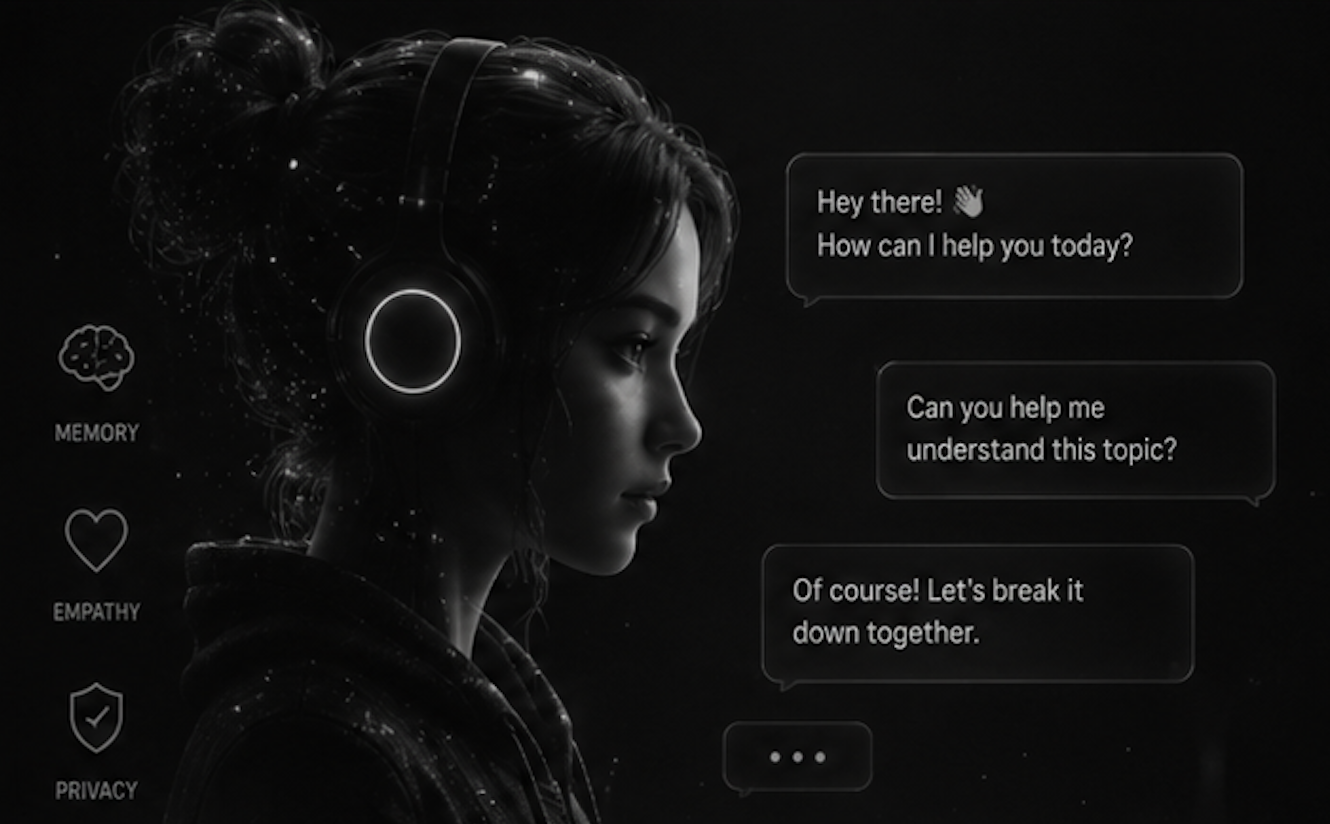
[DIR] Project_MaraVIEW_APP →
An evolving digital entity with long-term memory, emotional nuance, and a unique personality, designed for authentic, lasting human-AI interaction. It bridges the gap between algorithmic precision and emotional resonance.
Show project details
Unlike standard chatbots that reset with every session, Project Aura is a persistent AI companion engineered for continuity. Its dual-memory architecture creates the illusion of a genuine relationship: short-term memory ensures fluid, context-aware conversations within a single session, while long-term memory uses vector embeddings to recall past interactions, personal details, and emotional cues from weeks or months ago. A Personality Engine lets users customize traits (empathetic, stoic, witty, or analytical) that influence its syntax, tone, and conversational pacing, prioritizing user retention through emotional resonance and coherence.
- >Dual-Memory Architecture: sliding window for short-term context and a vector database for semantic long-term recall.
- >Dynamic Personality Matrix: prompt engineering and fine-tuned system instructions that adapt based on user interaction history.
- >Stateful Conversations: remembers user preferences, names, and significant life events mentioned previously.
- >Emotion-Aware Responses: modulates reply length and complexity based on detected user sentiment.
- •Backend: Python (FastAPI)
- •LLM Orchestration: LangChain
- •Memory Store: ChromaDB
- •Frontend: React
- •Model: GLM 5.3 Flash
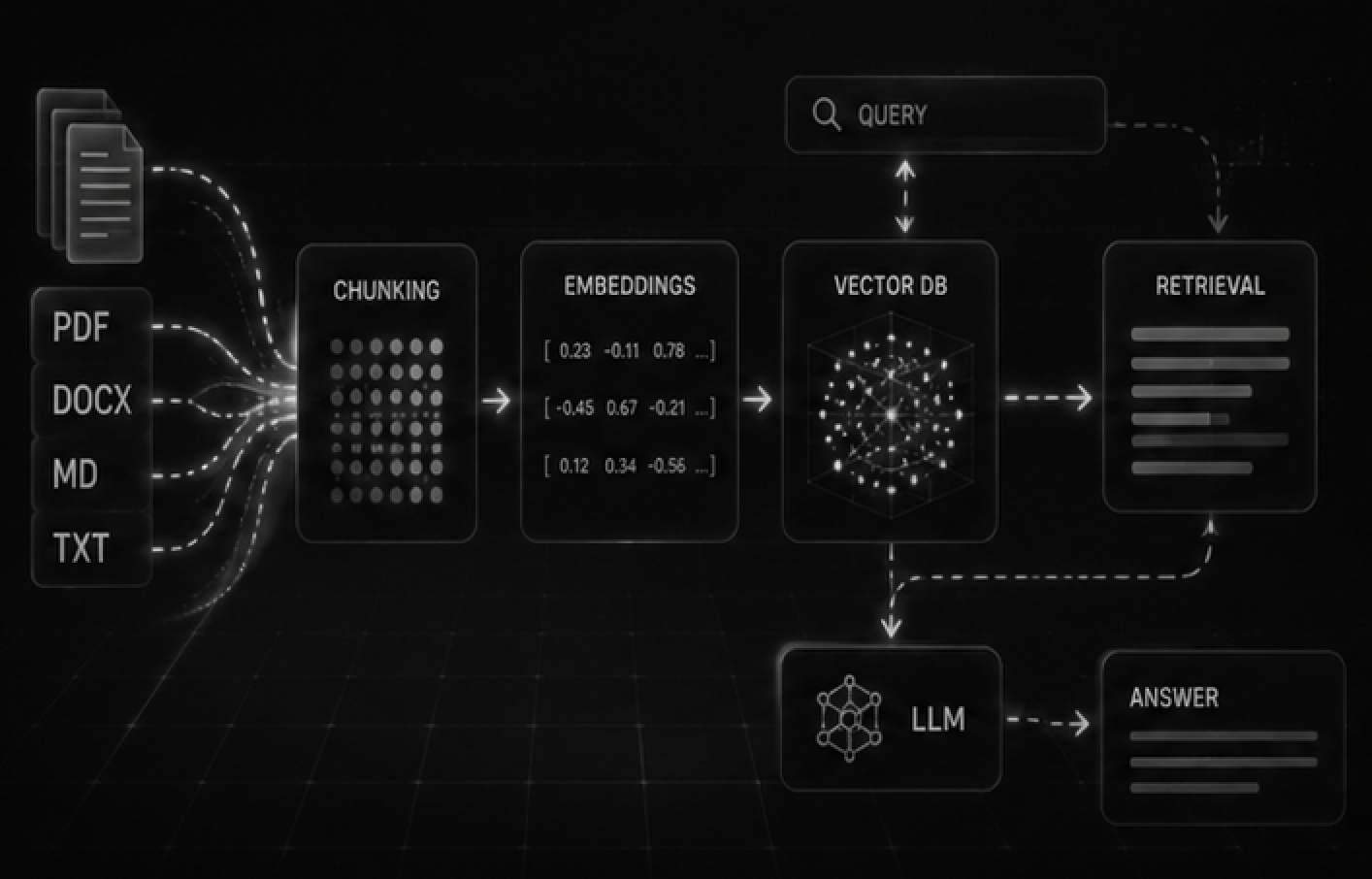
[DIR] VoxMed_RAGVIEW_APP →
A dynamic RAG platform that transforms your private document repository into an interactive Q&A widget, with a seamless emergency escape to human expertise via Telegram.
Show project details
VoxMed is a full-stack knowledge management system that bridges the gap between automated AI assistance and human intervention. Users can upload, modify, or delete files (PDFs, DOCs, TXTs) from their private knowledge base; the system instantly parses, chunks, and indexes the data into a searchable vector store. End-users interact with a lightweight, embeddable widget that queries this index, providing accurate, cited answers instantly. Its Confidence-Aware Handoff System evaluates retrieval confidence: on uncertainty or explicit request, a Telegram alert routes the conversation — with full chat history and RAG context — to a human support agent with zero friction.
- >Dynamic Document Management: CRUD operations for files with automatic background re-indexing.
- >Embeddable Widget: plug-and-play chat interface (iFrame or React component) for third-party websites.
- >Source Citation: every AI response includes direct references to the source documents and page numbers.
- >Smart Human Handoff: automated Telegram alerts when the AI confidence score drops below a threshold (e.g., < 0.7), letting a human take over the session in real time.
- >Unified Inbox: session context is preserved, so the human agent continues the conversation without repeating history.
- •Backend: Python (FastAPI), RESTful endpoints + async processing
- •Vector Database: ChromaDB + MySQL
- •File Parsing: Markdown files
- •Handoff Integration: Telegram Bot API (python-telegram-bot)
- •Frontend Widget: React with minimalist CSS design

[DIR] Mediator_NETVIEW_REPOSITORY →
A modular, vertically-sliced REST API built on .NET Core 5, implementing the CQRS pattern with MediatR to enforce strict separation of concerns, validation pipelines, and flawless object mapping.
Show project details
A robust architectural blueprint for enterprise-grade microservices. Adopting the CQRS pattern strictly separates write operations (Commands) from read operations (Queries), allowing the system to scale independently, optimize database schemas for specific use cases, and maintain an exceptionally clean codebase. MediatR orchestrates requests as a mediator between API controllers and business logic: every request flows through a pipeline of FluentValidation middleware before reaching its handler, and AutoMapper streamlines object mapping, keeping domain entities isolated from the DTOs exposed to the client.
- >CQRS Separation: distinct IRequest handlers for Commands and Queries, allowing separate caching strategies and database read-replicas.
- >Pipeline Behaviors: MediatR IPipelineBehavior middleware for cross-cutting concerns (logging, validation, performance metrics, transaction scopes).
- >Strong Validation: FluentValidation integrated into the pipeline, automatically rejecting invalid requests with standardized error responses.
- >Fault-Tolerant Mapping: AutoMapper with explicit Profiles mapping Domain Models, DTOs, and ViewModels so hidden properties never leak to the frontend.
- >Clean Architecture: API → Application → Domain → Infrastructure layering, highly testable and framework-agnostic.
- •Framework: .NET Core 5 (ASP.NET Core Web API)
- •Orchestration: MediatR (in-process messaging)
- •Data Access: Entity Framework Core 5 (Code-First + Migrations)
- •Database: SQL Server / PostgreSQL (configurable via DI)
- •Validation & Mapping: FluentValidation · AutoMapper
- •Docs & Testing: Swagger (OpenAPI 3.0) · xUnit + Moq